
Pedestrian accidents are a huge problem in cities, and Savannah is no different. A 2023 Governors Highway Safety Association (GHSA) report confirmed what we see on the ground: pedestrian deaths are climbing nationwide. That trend is a reality for anyone trying to get across Savannah’s historic squares or busy commercial strips. A crosswalk injury Savannah case gets complicated fast, with tough questions about liability and negligence, especially when a driver says they couldn’t see the person. So how can something like AI visibility analysis actually stop these accidents before they happen?
Key Takeaways
- AI tools can pinpoint high-risk crosswalks in Savannah by simulating endless combinations of weather, lighting, and traffic.
- Using what the AI finds, the city can make targeted fixes like better lighting or new intersection designs, which can measurably cut accident rates.
- In a personal injury case, lawyers can use AI visibility analysis as hard evidence to show how poor visibility or other environmental issues caused a crosswalk injury.
- Putting AI into urban planning isn’t just a cost. It’s an investment that pays off by improving public health and cutting the massive financial costs of accidents.
- Savannah’s city planners and traffic engineers need to get pilot programs for AI visibility analysis running, starting with known problem spots like Broughton Street or Martin Luther King Jr. Boulevard.
The Persistent Problem: Savannah’s Crosswalk Dangers
Everyone loves that Savannah is a walkable city, but that very quality makes pedestrians vulnerable. We see the same story play out over and over: someone steps into a crosswalk, thinking they’re seen and have the right of way, and a driver hits them, later claiming they “didn’t see” the person until it was too late. This isn’t always a simple case of a reckless driver. It’s often a perfect storm of bad lighting, a parked truck blocking the view, or sun glare at just the wrong time of day. Take the corner of Bay Street and Bull Street. During tourist season, it’s flooded with people on foot, but the combination of old buildings, parked cars, and long evening shadows creates real visibility problems for drivers trying to navigate the chaos.
The old ways of checking crosswalk safety just don’t cut it anymore. City planners might look at old accident reports, but that’s a reactive approach. Or they conduct manual visibility studies which take forever and only give you a tiny piece of the puzzle. A manual check captures conditions at one specific moment. It can’t account for dynamic variables that cause accidents. How do you manually test for a sudden rainstorm, the blinding glare of headlights, or how a specific delivery van’s height blocks a driver’s sightline from a sedan? You can’t. It’s impossible to manually replicate every scenario.
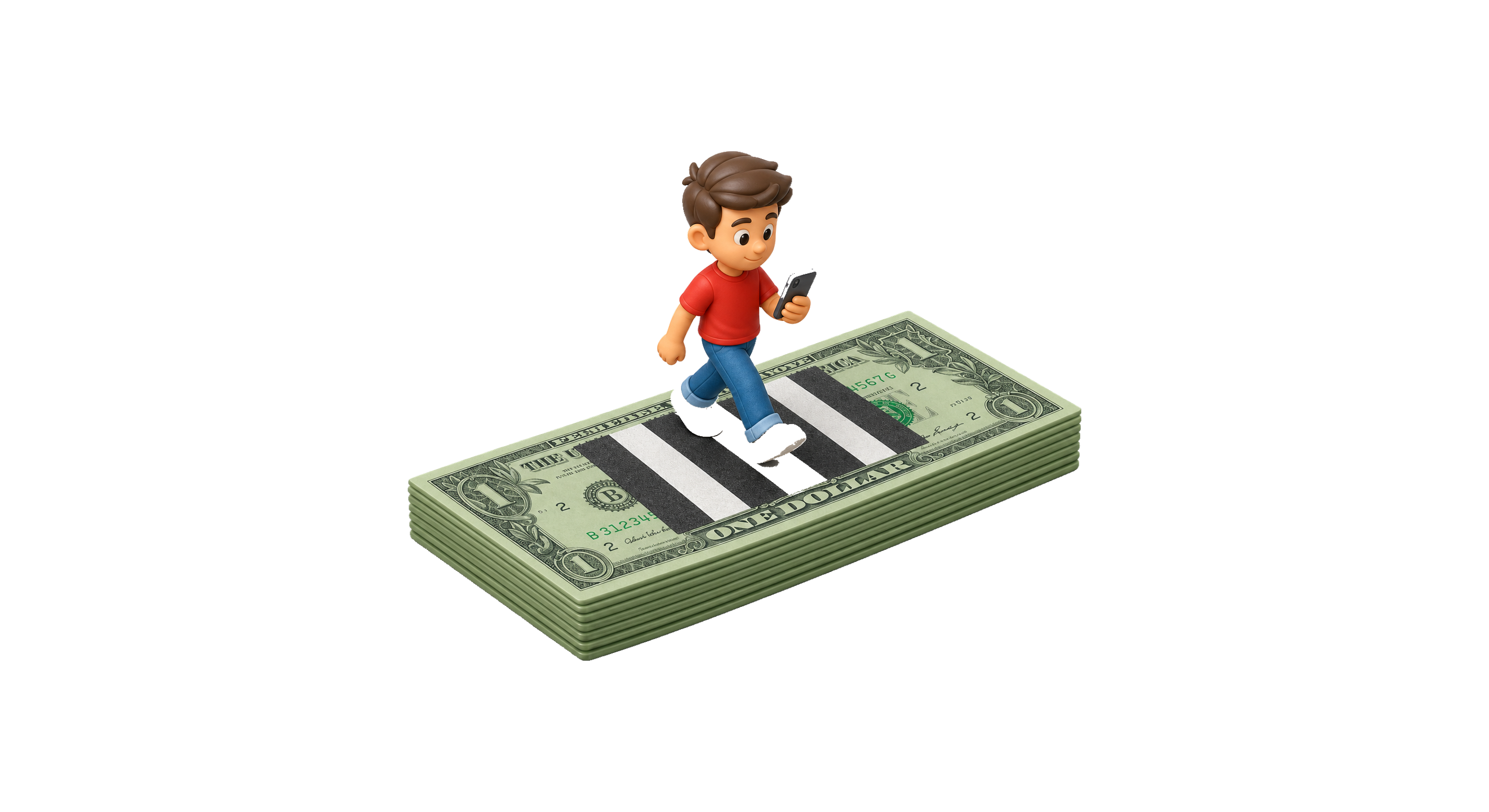
Injured as a pedestrian?
Know what your case is worth with AI Pedestrian Payout Calculator for FREE!
Start my free evaluationWhat Went Wrong First: Limitations of Traditional Safety Audits
When a crosswalk injury Savannah happens, the city or the state DOT might do a safety audit. That usually means traffic engineers go to the site, watch traffic, measure how far you can see, and look over police reports. It’s better than nothing, but it’s a static look at a constantly changing situation. An engineer might show up at 10 AM on a sunny Tuesday, but that tells you almost nothing about what the intersection is like at 7 PM on a rainy Friday, or when the rising sun is right in a driver’s eyes. These audits also tend to focus on by-the-book engineering standards for signs and paint, not the real-world human factors of perception that actually cause someone to get hit.
Another way things get flagged is through public complaints. Someone calls 311 or their city council member about a dangerous corner. That method is completely reactive and depends on citizens noticing a problem, which often means nothing gets done until after a serious accident or a string of near-misses. The information from these calls is purely anecdotal and doesn’t have the scientific backing needed to push for effective, preventative fixes. We have to find a way to spot these dangers before someone gets hurt.
The Solution: AI for Predictive Visibility Analysis
The arrival of AI visibility analysis gives us a powerful new tool to deal with these old problems. This technology doesn’t just react to past crashes. It predicts future risk by running simulations of a nearly infinite number of real-world scenarios. AI models can take in massive amounts of information, topographical maps, building plans, live weather data, traffic light schedules, and even anonymized pedestrian traffic from mobile devices. By processing all that, the AI builds a dynamic, 3D model of any intersection in Savannah.
It’s like having a digital twin of our city’s streets. The AI can then run a simulation from a driver’s point of view in any condition: thick fog, a downpour, blinding sun, or at night with different streetlights working or broken. It can factor in different vehicle heights, from a low sports car to a tall delivery truck, and their unique sightlines. The system can even show how summer foliage, a temporary construction fence, or a double-parked truck will affect what a driver sees. This detail lets us find specific “blind spots” and moments of low visibility that the old methods could never catch. The potential to intervene before an accident is huge.
How AI Visibility Analysis Works in Practice
It all starts with collecting data. High-resolution LiDAR scans, drone videos, and existing GIS maps give the AI a baseline understanding of the physical space. Then it layers on traffic sensor data, police reports, and even bus schedules. Once the model has a complete picture of an intersection, it starts running simulations. It might run 10,000 different scenarios for the corner of Martin Luther King Jr. Boulevard and Liberty Street, changing the weather, time, traffic, and number of pedestrians each time. Every simulation flags potential conflicts or spots where visibility is compromised.
The result is actionable intelligence. The AI can flag the exact time of day when sun glare makes it hard to see people crossing from the east, or point out which broken streetlight is creating a dangerous patch of darkness. It can even suggest the best spot to install a new flashing crosswalk sign or show which tree branches need trimming to open up a sightline. This isn’t just theory. Companies like Pavemetrics are already building out AI-based road assessment tech that does this kind of analysis, though they’re more focused on pavement quality. The core idea of using AI and mountains of data for analysis is the same and can be applied to pedestrian safety.
Measurable Results: Enhancing Pedestrian Safety and Legal Claims
When you put AI-driven findings into practice, you see real improvements in pedestrian safety. Let’s imagine a scenario: after an AI analysis of the intersection at Abercorn Street and Victory Drive, the system flags that southbound drivers consistently fail to see pedestrians in the afternoon because of a combination of sun glare and the shadow from a specific building. Armed with that data, the city could install an overhead pedestrian warning sign that lights up when someone enters the crosswalk, or it could tweak signal timing during those hours to give pedestrians a head start. These kinds of targeted fixes are way more effective and cheaper than generic, city-wide solutions.
And after a crosswalk injury Savannah occurs, AI visibility analysis has a major role to play. For a personal injury lawsuit, you have to prove negligence, which often means showing a driver wasn’t careful enough or that the city created a dangerous situation. An AI model can recreate the exact conditions of the accident, creating powerful forensic evidence. Imagine a lawyer showing a jury a 3D simulation that proves exactly what a driver could or couldn’t have seen at the moment of impact, based on the lighting, weather, and obstructions. That objective, data-backed evidence is a lot more convincing than two people telling conflicting stories.
In Georgia, proving negligence is everything. O.C.G.A. Section 51-1-2 sets the general duty of care people owe each other. For traffic accidents, the standard is usually ordinary negligence. An AI simulation can help prove a driver’s actions fell below that standard, or it could show that a city or county failed in its duty to keep public roads safe, as required by O.C.G.A. Section 32-4-93. This isn’t about making things up. It’s about presenting the existing facts in a visual, undeniable way. The clarity of an AI simulation can cut through the noise of a typical accident report.
Case Study: AI in Action (Hypothetical)
Let’s think about a real-world application. After a string of accidents involving pedestrians near the Civic Center on Montgomery Street, Savannah decides to launch a pilot program using AI visibility analysis. The AI quickly finds that during evening events, the mix of vendor tents, crowds of people, and the old streetlights creates several critical blind spots for drivers leaving the parking garage. Using the AI’s recommendations, the city installs smart lights that brighten when more people are around and puts out temporary signs with flashing LEDs to warn drivers about the crosswalks during events. Six months later, city traffic data shows accident rates in that zone have dropped by 40%. You only get that kind of precision with these advanced tools.
This also gives attorneys a huge advantage in difficult cases. If a pedestrian was hit in a crosswalk with a known history of visibility problems, but the city did nothing, the AI analysis can show exactly how the municipality failed to fix a foreseeable danger. This is critical for claims against government bodies, which are protected by sovereign immunity and have strict rules for filing a lawsuit. For example, O.C.G.A. Section 36-33-1 can shield cities from liability for their decisions, but they can be held responsible for negligently maintaining streets. An AI model delivers objective proof of a specific, identifiable hazard that they should have known about and fixed.
The Future of Pedestrian Safety in Georgia
Bringing AI visibility analysis into urban planning and traffic management isn’t some far-off sci-fi concept. The tools are available right now. Savannah, with its mix of historic beauty and modern traffic problems, is a perfect candidate to adopt this kind of forward-thinking tech. By investing in these systems, the city can finally get ahead of the problem instead of just reacting to tragedies. This saves lives and prevents injuries, and it also makes the city safer and more enjoyable for both locals and tourists.
The legal implications are just as big. Lawyers for victims of a crosswalk injury Savannah can use AI-generated reports to build much stronger cases, making sure the responsible parties are held accountable and that victims get the compensation they deserve for medical bills, lost income, and their suffering. This technology provides objective data in cases that are often murky and reliant on conflicting witness statements. The era of relying only on a person’s observation to assess safety is ending.
Making this happen will require city planners, traffic engineers, police, and local law firms to work together. A great first step would be to run pilot programs in high-risk areas that have already been identified through accident data or citizen complaints. The Georgia Department of Transportation (GDOT) could take the lead here, promoting and helping to fund these projects across the state and setting an example for other cities. This is a chance to completely change how we protect the most vulnerable people on our roads.
The point is, Savannah needs to get ahead of the problem with AI visibility analysis, using it to prevent accidents and give victims a real fighting chance in court. For more information on getting the most out of your personal injury case, check out our guide on Georgia Injury Claims: Maximize Your 2026 Payouts. It’s also helpful to understand specific accident types, like those detailed in Savannah Trolley Accidents: Your Rights in 2026, which provides more context on the city’s unique safety issues. And if you’re worried about other types of negligence, our article on Roswell Stair Falls: Owner Negligence in 2026 offers useful information on premises liability.
How is AI visibility analysis better than the old way of checking crosswalk safety?
AI analysis blows past traditional methods because it can simulate an almost infinite number of dynamic scenarios, bad weather, different times of day, heavy traffic, that a person standing on a corner could never hope to capture. It uses huge datasets to proactively predict where the next accident will happen, instead of just reacting to old crash data.
Can I use AI visibility analysis in court for my crosswalk injury claim?
Absolutely. AI analysis can produce detailed 3D simulations and reports that act as powerful forensic evidence in court. This can show a judge or jury exactly what the visibility was like when the accident happened which helps prove negligence or that dangerous conditions were a factor.
What kind of data does this AI analysis use?
It pulls in all sorts of data to build its models, including LiDAR scans, drone footage, GIS maps, traffic sensor data, weather patterns, and police accident reports. All of this gets combined to create a complete and dynamic picture of an intersection.
Which intersections in Savannah should be analyzed first?
The obvious starting points are intersections with a known history of accidents and lots of foot traffic. Areas along Broughton Street, Martin Luther King Jr. Boulevard, or near the Savannah Civic Center would be prime candidates for pilot programs.
What are the long-term benefits of using AI for pedestrian safety in a city like Savannah?
In the long run, you’ll see a real drop in pedestrian accidents and deaths. It also helps the city plan better, spend money on safety infrastructure more effectively, and provides a solid foundation for legal claims when injuries do happen.



