
The screech of tires, a blaring horn, then a sickening thud. That’s all Robert heard before the world went sideways. He was just trying to cross Main Street to catch a late movie in downtown Houston’s Theater District when a car hit him. The driver immediately claimed Robert was jaywalking, which threw a huge wrench into his chances of getting any money for his injuries in a Houston pedestrian accident. Can you really be at fault for getting hit if you weren’t in a crosswalk?
Key Takeaways
- Texas law (Texas Transportation Code Section 552.005) says pedestrians should use crosswalks, but getting hit outside one doesn’t automatically kill your injury claim.
- Thanks to Texas’s comparative fault rules under Texas Civil Practice and Remedies Code Chapter 33, you can still get paid as long as you’re not found to be more than 50% at fault for the crash.
- Winning against a jaywalking defense means gathering hard evidence: witness statements, traffic camera footage from intersections like those along Travis Street, and reports from accident reconstruction experts.
- Even if they argue you were jaywalking, your claim can still cover all your medical bills, lost pay, pain and suffering, and what you’ll need for future care.
- After a pedestrian-car wreck in Houston, talking to a personal injury lawyer fast is the only way to protect your rights and get a strong case moving.
Robert’s Ordeal: The Immediate Aftermath
There Robert was, lying on the asphalt with his leg throbbing, the city sounds now muffled and distant. Paramedics showed up fast, and so did the Houston Police. The driver, a young woman named Sarah, looked completely rattled but insisted Robert had just bolted out between parked cars, leaving her zero time to stop. Robert, groggy and in shock, remembered looking both ways but had to admit he wasn’t in a marked crosswalk. That one detail, the “jaywalking” accusation, became the whole fight from moment one.
In Texas, the law does put duties on pedestrians. According to Texas Transportation Code Section 552.005, if you cross a street somewhere other than a marked or unmarked crosswalk at an intersection, you’re supposed to yield to cars. Insurance companies love to wave this statute around to pin all the blame on the pedestrian, but it doesn’t automatically let a negligent driver off the hook.
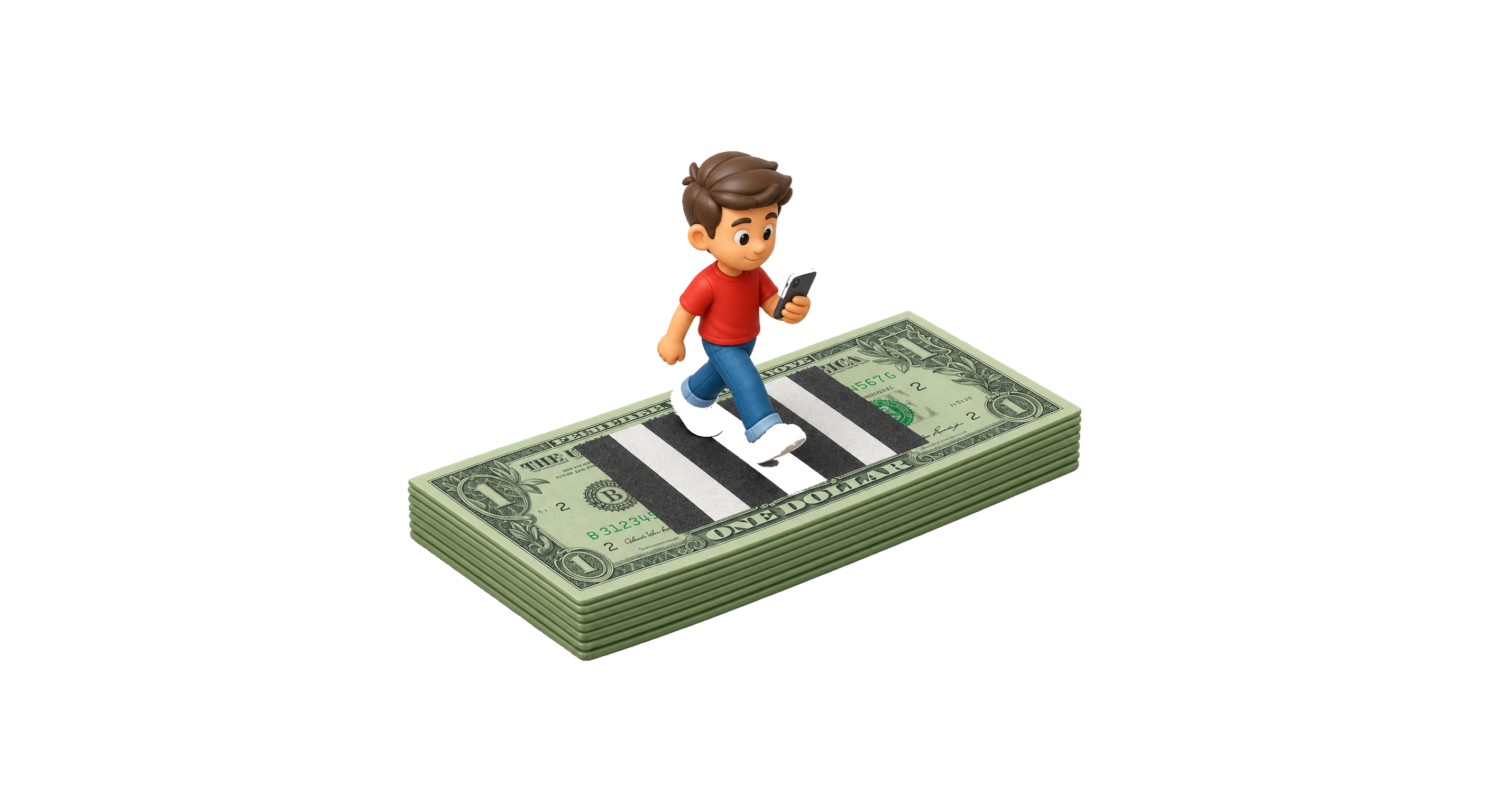
Injured as a pedestrian?
Know what your case is worth with AI Pedestrian Payout Calculator for FREE!
Start my free evaluationThe Complexities of Comparative Fault in Houston
A quick call to a paralegal friend gave Robert the best advice he could’ve gotten: “Don’t admit anything.” His friend explained that Texas is a modified comparative fault state, which means even if Robert was jaywalking, the driver could still be held responsible for a big chunk of his injuries. This whole concept, sometimes called proportionate responsibility, is laid out in Texas Civil Practice and Remedies Code Chapter 33. If a jury decides you were 51% or more at fault, you get nothing. But if your share of the fault is 50% or less, you can still collect damages, just reduced by your percentage of fault. So if Robert’s damages were $100,000 and a jury put him at 20% fault, he’d still walk away with $80,000.
This was a lifeline for Robert. He was looking at huge medical bills from his fractured tibia and all the cuts and scrapes. He’d had surgery at Houston Methodist Hospital, a top-tier trauma center, and knew he had a long, painful recovery ahead. The thought that he might get zero compensation because he crossed in the wrong spot was terrifying.
Building the Pedestrian Accident Case: Gathering Evidence
Robert realized he was out of his depth and called a personal injury law firm in Houston that knew how to handle these kinds of pedestrian cases. The attorney, Ms. Chen, saw the jaywalking defense coming a mile away. Her first move was to lock down every piece of evidence she could find.
Involved in a truck accident?
Trucking companies begin destroying evidence within 14 days. Truck accident claims average 3× higher than car accidents.
The firm got an investigator on the scene on Main Street right away. They hunted for traffic cameras, which are all over downtown Houston, especially at big intersections like Main and Capitol or Main and Dallas. They didn’t find a direct shot of the impact, but security cameras on nearby businesses gave them views of the street that helped show traffic speed and flow just before the crash. Witnesses were just as important. One guy waiting for a bus near the Alley Theatre told the investigator Sarah’s car looked like it was going way faster than the 30 MPH speed limit.
Challenging Driver Negligence: Beyond Jaywalking
“Just because a pedestrian is outside a crosswalk doesn’t give a driver a free pass to hit them,” Ms. Chen explained to Robert. This is a basic tenet of negligence law. So, could the driver have avoided the crash if she’d been paying attention, driving a safe speed, and not distracted? That’s the real question.
The investigation started to punch holes in Sarah’s story. She admitted to cops she was glancing at her phone’s GPS right before the impact, a classic case of distracted driving. On top of that, Ms. Chen’s firm hired an accident reconstructionist who put together a preliminary report suggesting Sarah’s car was doing closer to 40 MPH in a 30 MPH zone. That extra speed ate up her reaction time and stopping distance. The expert’s report wasn’t just a guess. It was based on a careful analysis of the skid marks, the damage to the car, and how Robert’s body was thrown by the impact.
This is where the real work begins. You can’t just tell a jury “the driver was speeding” and expect a check. You have to prove it, quantify the speed, show exactly how it made the collision unavoidable for the pedestrian, and present it in a way that makes an adjuster or a jury understand. The feds at the National Highway Traffic Safety Administration (NHTSA) hammer this point home all the time: distracted driving and speeding are top killers of pedestrians, which puts the responsibility right back on the driver’s shoulders, even when the person on foot isn’t perfect.
Negotiating with the Insurance Company: The Battle Over Fault
Armed with this evidence, Ms. Chen went to battle with Sarah’s insurance company. The insurance adjuster played the same old song, of course, starting with a garbage offer and leaning hard on Robert’s jaywalking. “Your client was outside the crosswalk, breaking the law,” the adjuster argued. “We’ll offer a nuisance value to make this go away, but that’s it.”
Ms. Chen didn’t budge. She hit back with the witness statement about Sarah’s speed, the reconstruction report that proved it, and Sarah’s own admission to being distracted by her phone. She pointed to the severity of Robert’s injuries as proof of a high-speed crash. “Your insured had plenty of time and space to see Robert,” Ms. Chen argued, “if she’d been driving with even a little bit of care. Her negligence is the reason we’re here.”
The Nuance of “Unavoidable” Accidents
There’s this myth that if a pedestrian is jaywalking, the accident was “unavoidable.” That’s almost never true. Even when a person steps out from between cars, a driver who is paying attention, going the speed limit, and not on their phone has precious seconds to hit the brakes or swerve. It’s the *lack* of those responsible actions that lawyers like Ms. Chen build a case around. We so often find that the drivers in these wrecks were breaking traffic laws themselves.
The negotiations dragged on. The insurance company kept hammering the jaywalking defense, trying to wear Robert down and get out cheap. But Ms. Chen held firm. She prepared the entire case for trial, pulling together every medical record, bill, and expert report. When you prep a case this thoroughly, it sends a clear signal to the insurance company that you’re not bluffing and you’re ready to go to court. That’s what gets them to rethink their lowball position.
Resolution and Lessons Learned
After a few more rounds of tough talks, and with the real threat of a jury hearing all about Sarah’s speeding and distracted driving, the insurance company finally caved and made a serious offer. Robert accepted a settlement that covered all his medical bills (past and future), his lost income from being out of work, and a fair amount for his pain and suffering. Though the final number was reduced by a small percentage to account for his own fault in jaywalking, it was worlds away from the insulting first offer.
Robert’s case proves a point for anyone hit by a car in Houston, especially when jaywalking is in the mix: never assume you have no case. Pedestrian accident law is a tangled mess, but comparative fault exists to make sure that people who are only partly to blame can still get justice. A driver’s duty of care doesn’t just vanish because a pedestrian makes a mistake. Their own negligence is almost always a huge factor.
The bottom line is simple. If a car hits you or someone you love in Houston, no matter what happened, get to a doctor first, then call a personal injury attorney. A good lawyer will dig into the accident, tear down the other side’s excuses, and fight to get you the money you’re owed. You can’t let an adjuster’s version of the law be the final word on your rights.
This same idea of splitting the blame, comparative fault, shows up in other cases too, like with motorcycle accidents or sorting out liability in road rage incidents.
What does “jaywalking” mean in Texas law?
In Texas, “jaywalking” is basically crossing a street where there isn’t a marked or unmarked crosswalk, forcing drivers to yield to you. Texas Transportation Code Section 552.005 says pedestrians have to yield the right-of-way to cars when they cross outside a crosswalk.
Can I still get compensation if I was jaywalking when hit by a car in Houston?
Yes. Texas has a “modified comparative fault” rule. As long as you’re found to be 50% or less responsible for the accident, you can still get money. Your total award will just be reduced by whatever your percentage of fault is. So if you’re 20% at fault, you get 80% of your damages.
What evidence is important in a pedestrian accident case involving jaywalking?
Evidence is everything. You’ll want police reports, any witness statements, video from traffic or security cameras, photos of the scene, and your medical records. Most important is evidence about the driver’s actions, were they speeding, on their phone, or otherwise negligent? That’s what can turn the case in your favor.
What is a driver’s duty of care even if a pedestrian is jaywalking?
Drivers in Texas must always operate their cars with reasonable care to avoid hitting anyone on the road, including pedestrians who aren’t in a crosswalk. They need to pay attention, follow the speed limit, and stay off their phones. “Jaywalking” is not a legal excuse for running someone down.
How quickly should I contact an attorney after being struck by a car in Houston?
Contact a personal injury lawyer as soon as you can after you’ve seen a doctor. Evidence disappears fast. Security footage gets erased, witness memories get fuzzy, and the car gets repaired. An attorney can start preserving evidence and building your case right away before the insurance company tries to shut it down.



