
Key Takeaways
- In Georgia, property owners have a legal obligation to keep their property safe, and that includes putting up warning signs for any hazards.
- O.C.G.A. Section 51-3-1 is the law that holds owners and occupiers responsible for using “ordinary care” to keep their property safe for people they invite in.
- Evidence is everything in these claims. You’ll need things like an incident report, photos showing the hazard and the lack of a warning sign, and any witness info.
- A major challenge in Georgia cases is proving the owner had “constructive knowledge” of a hazard, especially when there was no warning sign.
- Getting a lawyer who knows Georgia slip and fall cases can make a huge difference in your claim’s success, especially when you’re up against complicated liability arguments.
A sudden fall in a Columbus retail store can leave you with serious injuries, medical bills piling up, and lost time from work. When the fall happens because there was no warning sign, the legal responsibility lands right on the property owner. Knowing your rights in Georgia isn’t just a good idea. It’s how you get the compensation you deserve.
The Legal Duty of Care for Georgia Property Owners
Georgia property owners owe a duty of care to anyone they invite onto their property. The law that spells this out is O.C.G.A. Section 51-3-1. It says that an owner who invites people onto their land for a lawful reason is liable for injuries caused by their “failure to exercise ordinary care in keeping the premises and approaches safe.” This single law is the foundation for premises liability claims across the state, from a big-box store near Peachtree Mall to a small shop in Midtown Columbus.
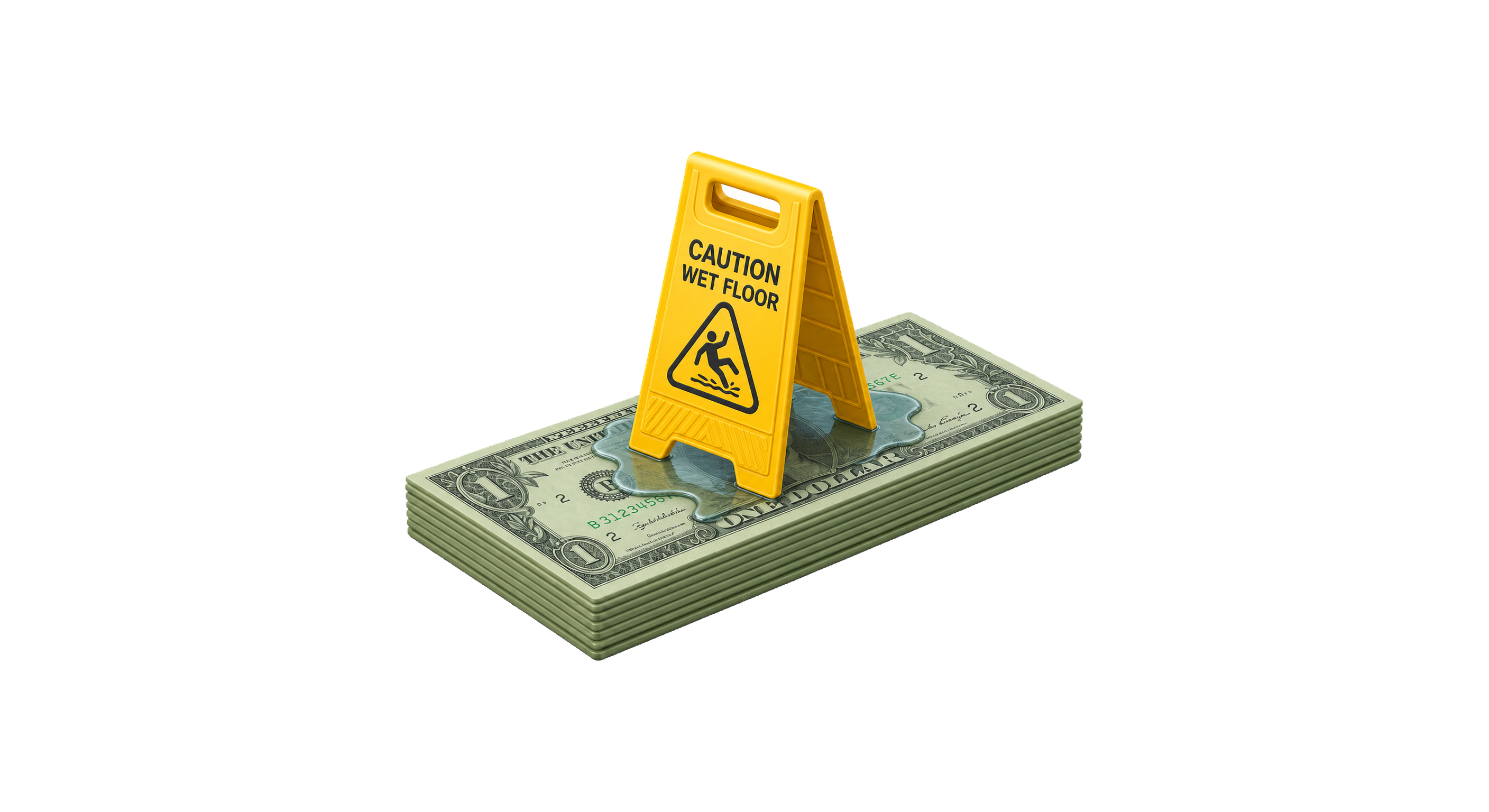
So what’s “ordinary care”? It means owners have to actively look for potential dangers on their property. If they find one, they have to either fix it or give people a clear warning. A wet floor from a leaky cooler, a freshly mopped aisle, or a cracked tile are all classic hazards. A missing “Wet Floor” sign is a direct violation of this duty. If a customer slips on a puddle that’s been sitting there for a while with no sign, that’s a clear failure of ordinary care. The law doesn’t expect owners to be mind readers, but it does expect them to be reasonably diligent about keeping the store safe for shoppers.
Injured in a slip & fall?
Know what your case is worth with AI Slip & Fall Payout Calculator for FREE!
Start my free evaluationThis duty goes beyond just spills. Imagine a store is doing renovations and leaves a pile of tools or construction materials in an aisle. If there are no cones, tape, or signs telling customers about the obstruction, the owner is likely negligent. The rule of thumb is this: if a condition creates a foreseeable risk of someone getting hurt, the owner has to take steps to stop that from happening. Often the easiest and most obvious step is a simple warning sign.
Involved in a truck accident?
Trucking companies begin destroying evidence within 14 days. Truck accident claims average 3× higher than car accidents.
Establishing Negligence: The Role of Missing Warning Signs in Columbus
To win a slip and fall case, you have to prove the property owner knew (or should have known) about the dangerous condition and did nothing to fix it or warn you about it. A missing warning sign is powerful proof of that failure. For example, if a Columbus grocery store’s freezer aisle is always leaking and creating puddles, and management knows about it but doesn’t put up a permanent sign or clean it up consistently, their negligence is pretty clear.
Georgia law has two types of knowledge: actual and constructive. Actual knowledge is straightforward, it means the owner or an employee knew about the spill. You could prove this if an employee admits they saw it or if there are old incident reports about the same problem. Constructive knowledge is more common and tougher to prove. It means the hazard was there for so long that the owner *should have* found it during a reasonable inspection. A puddle that’s been on the floor for an hour is a much stronger case for constructive knowledge than one that’s been there for five minutes. The clock is always ticking.
The person who got hurt has the burden of proving the owner’s negligence caused their injuries. This is why you have to gather evidence right away. If you fall in a store over on Veterans Parkway in Columbus, you need to take pictures of whatever you fell on, the area around it, and the fact that there are no warning signs anywhere. This kind of visual proof shows not only that the hazard was there, but that the store did nothing to protect its customers. Without it, it’s just your word against theirs, and that’s a tough spot to be in.
Common Hazards and the Critical Need for Warnings
Retail stores are full of potential hazards if they aren’t managed correctly. It’s not just about spills. Think about these common dangers where a warning sign is absolutely necessary:
- Wet Floors: This is the big one. Mopping, leaks, or even just rain tracked in from outside can make floors slick. No “Wet Floor” sign is a huge liability.
- Uneven Surfaces: A slight change between flooring types, like from tile to carpet, or a cracked tile or buckled rug can easily trip someone. If they aren’t marked or fixed, they’re hidden traps.
- Obstructions in Aisles: Pallets, boxes being stocked, cleaning carts, or even poorly placed displays can create tripping hazards that need to be blocked off or marked with a sign.
- Poor Lighting: A dimly lit hallway or stairwell makes every other potential hazard ten times more dangerous. It’s not a sign issue per se, but bad lighting makes a hazard invisible, which requires some other kind of warning.
- Construction or Maintenance Areas: Any part of the store being worked on has to be clearly roped off with signs like “Construction Area” or “Work in Progress.”
Not putting up a cheap plastic sign can lead to devastating and expensive injuries. A broken hip, a concussion from your head hitting the floor, or a severe back injury can mean tens of thousands in medical bills, plus lost income and significant pain. That’s why the law demands proactive safety measures, not just cleaning up the mess after someone is already hurt. The safety of customers has to come first.
Working through a Slip and Fall Claim in Columbus: What to Do After an Incident
If you have a slip and fall in a Columbus retail store and there were no warning signs, what you do in the moments after is incredibly important for your claim. First, get medical help. Your health comes first, and the medical records will create an official paper trail of your injuries for any legal action. Some injuries, like concussions or soft tissue damage, don’t show up right away, so it’s best to get checked out even if you feel okay.
Next, if you’re able to, document everything. Use your phone to take pictures and videos of the exact spot where you fell. Get close-ups of the hazard and wide shots showing the area with no warning signs in sight. Make a note of the time and date. If anyone saw what happened, get their name and phone number. Report the fall to a store manager right then and there, and make sure they file an incident report. Don’t leave until you know a report has been created. When you talk to them, just state the facts. Don’t guess about what happened or say you’re sorry.
You also need to hold on to your evidence, like the shoes you were wearing. Store surveillance video can be a goldmine of proof, but stores rarely hand it over without a formal legal request. This is where getting a lawyer becomes essential. An experienced Georgia premises liability attorney can send a preservation letter to demand that footage, track down and interview employees, and look at the store’s cleaning and maintenance logs to see how long that hazard was really there.
You also need to understand Georgia’s laws on fault, like contributory negligence. Georgia has a modified comparative negligence rule. This means if a jury decides you are 50% or more to blame for your own fall, you get nothing. If you’re less than 50% at fault, you can still get compensation, but it will be reduced by your percentage of fault. This rule makes it absolutely essential to build a strong case showing the store’s clear negligence, especially by proving the absence of warning signs.
Conclusion
A slip and fall in a Columbus store because there was no warning sign isn’t just a clumsy moment. It’s often the direct result of a property owner failing to follow the law. Knowing the details of Georgia’s premises liability laws, acting fast to document the scene, and getting legal help can make all the difference in protecting your rights and getting the compensation you’re entitled to.
What does “ordinary care” mean in a Georgia slip and fall case?
In Georgia, “ordinary care” means a property owner has to take reasonable steps to make their property safe for visitors. This includes doing regular checks for hazards, fixing any dangerous conditions they find, and putting up clear warnings for dangers that can’t be fixed right away, like a wet floor after mopping.
How does O.C.G.A. Section 51-3-1 affect my slip and fall case?
O.C.G.A. Section 51-3-1 is the key Georgia law that sets out a property owner’s duty to people they invite onto their property (like customers). It says owners are liable for injuries if they fail to use ordinary care to keep the place safe. This law is the legal basis for a claim when a missing warning sign leads to an injury.
What’s the most important evidence after a slip and fall?
Key evidence includes photos or videos showing the hazard and the lack of any warning signs, the incident report you filed with the store, and contact info for any witnesses. You also need your medical records and, if possible, the store’s surveillance footage. Don’t throw away the shoes you were wearing, either.
Can I get compensation if I was partly at fault for my fall?
Yes, as long as you are found to be less than 50% at fault. Georgia uses a “modified comparative negligence” rule. Your compensation will be reduced by whatever percentage of fault is assigned to you. But if you’re found to be 50% or more at fault, you can’t recover anything.
What’s the difference between actual and constructive knowledge?
Actual knowledge is when the property owner or an employee definitely knew about the specific danger (e.g., they saw the spill). Constructive knowledge is when the danger was there for so long that a reasonably careful owner *should have* known about it, even if they claim they didn’t.



